
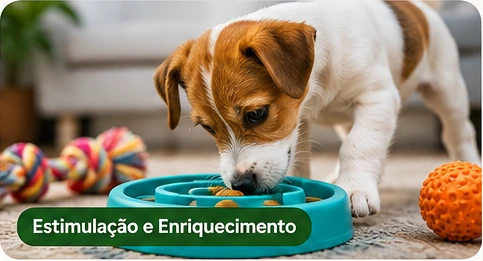
Scent games and tailored challenges that make everyday life more engaging without overstimulation.
What does dog enrichment mean?
Dog enrichment provides safe opportunities for exploration, sniffing, problem-solving, play, choice and rest. It does not mean leaving dozens of toys around or keeping a dog entertained every minute. The aim is to support natural behaviour in ways that suit each dog’s interests and abilities.
Enrichment can involve food, scent, social contact, learning and the physical environment. The Blue Cross suggests offering different types of activities and making sure challenges are not frustrating.
1. Snuffle mats and scent-based meals
A snuffle mat hides small pieces of dry food among fabric strips, encouraging the dog to search with their nose. Begin with food on top, where it can be seen easily. Once your dog understands the activity, hide a few pieces a little deeper.
Supervise your dog, especially if they chew fabric or attempt to swallow parts. Use a suitable, durable mat and clean it regularly. Where possible, use a portion of the dog’s usual daily food rather than adding extra treats.
2. Easy “find it” games
Let your dog see a small food reward and place it somewhere easy to find. Say “find it” and allow them to search. Gradually scatter a few pieces in safe locations, staying away from cleaning products and unsafe objects.
You can hide a favourite toy instead of food. These games require little equipment and can work in small homes. The Blue Cross provides further scent-work ideas.
3. Fillable toys and puzzle feeders
Fillable toys and feeding puzzles let dogs work to obtain part of a meal. Select a robust item of suitable size and start with an easy challenge. Raise the difficulty only once your dog can succeed without frustration.
Remove damaged toys and small parts that may be swallowed. Ask your veterinarian about suitable food if your dog has dietary restrictions, digestive problems or a medical condition.
4. Social play and short learning sessions
Playing together, searching for objects and practising simple reward-based skills also provide mental stimulation. Observe whether your dog wants to continue or would prefer a break. Individual preferences matter more than an assumed favourite game for a particular breed.
Balance active play with calm time. If the dog becomes increasingly restless or unable to disengage, choose an easier, quieter activity.
5. A home environment with choice and rest
Provide drinking water and comfortable, quiet places to sleep. Some dogs like to watch the world through a window; others need a sheltered space away from noise. Small changes to toy rotation, feeding routines or walking routes can offer variety without making daily life unpredictable.
Home enrichment complements, but does not replace, suitable walks, social needs and veterinary care.
How to adapt difficulty and check wellbeing
Begin with activities that allow quick success. If the dog walks away, shows frustration, destroys the material or becomes overexcited, make the task simpler. If they finish easily and remain interested, increase the challenge slightly.
Try rotating two or three activities through the week and note your dog’s preferences. Puppies, older dogs and animals with limited mobility may benefit from gentle, low-movement enrichment.
Frequently asked questions
Can enrichment replace a walk?
No. Indoor games complement suitable physical activity and safe outdoor exploration.
Do I need expensive equipment?
No. Searching for food, simple play and brief training exercises are accessible starting points.
Can I leave my dog alone with a snuffle mat?
Supervision is safest, especially for dogs that chew or swallow material. Remove damaged equipment promptly.
References and further reading
- Blue Cross — Enrichment for dogs
- Blue Cross — Scent work for dogs
- Blue Cross — How to make a snuffle mat
Editorial note: General educational information, not a substitute for veterinary advice or individual behaviour assessment.