
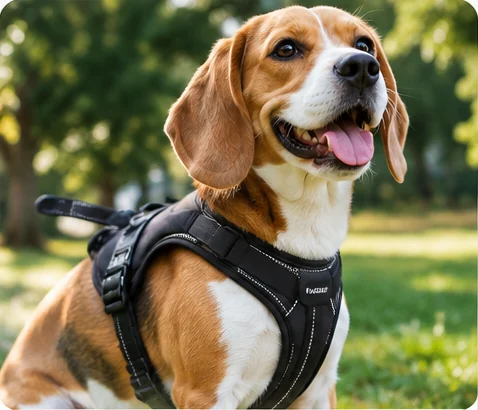
Choosing a dog harness is not primarily about colour or fashion. Fit, anatomy, comfort and security all matter. This guide explains how to measure, adjust, test and maintain a harness for everyday walks.
Fit comes before design
Measure the dog according to the manufacturer’s guide and check that the harness neither rubs nor slips. Fit matters more than how the product looks.
Start with the dog's measurements, not the size letter printed on the packaging. Manufacturers use different scales, so a medium in one range may not match another. Measure the chest with a flexible tape, follow the model's own sizing guide and check where the straps sit. A loose harness may allow escape; a tight one may cause rubbing.
Once fitted, check that the harness remains stable as the dog walks, turns and lowers its head. It should feel secure without compressing the body or restricting natural movement. Watch the shoulders and underarms during the first outings. Red marks or persistent reluctance to move suggest the fit or design needs reviewing.
Growing puppies need frequent adjustments. Older dogs or animals with mobility issues may benefit from easy-to-fit designs that do not require uncomfortable movements. Ask a vet for guidance if the dog has pain, an injury or specific medical needs.
What to compare
Look at adjustment points, attachment positions, stitching, visibility and how the shape affects shoulder movement. Consider the type of walking you do.
Buckles should be secure while remaining practical to open. Inspect seams, clips, lead attachment points and the feel of materials against the skin. Fabrics that stay wet, stiff straps and repeated rubbing can cause discomfort, particularly on longer walks.
Consider the walking environment. A dog walking near roads needs a reliable attachment and good visibility. Reflective details can help in low light but never replace attention to traffic. Dogs that back out of harnesses may require a different design and patient introduction to the equipment.
Avoid choosing a harness solely because it promises to stop pulling. Equipment and loose-lead training are linked but distinct. Rewarding calm walking, allowing suitable sniffing time and choosing manageable routes often matter more than any single product.
Try it before deciding
If possible, test the harness during a short supervised walk. Watch for rubbing, restricted movement or attempts to escape and adjust or change the model as needed.
Try the harness on before buying whenever possible, and observe the dog in motion. Adjust both sides, remove twists and ensure buckles do not press on sensitive areas. Introduce the equipment gradually with short positive experiences if your dog is wary of handling.
Check the fit again after a few minutes of walking, as straps can shift. Never leave a dog unattended in equipment that could catch on furniture, fences or other objects. Inspect wear regularly and replace a harness if any attachment point or fastener looks damaged.
Compare comfort, adjustability, materials, cleaning, visibility, escape risk and durability before deciding. Keep identification information up to date and use a suitable lead. A good harness fits the individual dog and the real conditions in which it will be used.
Which harness design should you consider?
Y-shaped and H-style harnesses, padded vest designs and models with different lead attachment points all have different advantages. The name on the packaging does not guarantee a good fit. The most important features are unrestricted shoulder movement, minimal rubbing and a secure attachment. Heavily padded products may feel soft, yet can retain heat; choose according to your dog and the climate.
A back clip is common for relaxed everyday walks. Some designs have a front clip to help guide movement during loose-lead training, but should be used gently and without sharp corrections. A harness does not teach loose-lead walking on its own. Be wary of promises that any single accessory will instantly cure pulling. Examine where straps cross the chest and whether the dog can move naturally.
Dogs at risk of slipping out may benefit from a properly fitted extra belly strap, but the design must suit their body. Puppies, short-nosed breeds and dogs with mobility problems require extra care. If a dog has pain, an injury or a health condition, ask a veterinarian to advise on suitable equipment.
How to measure and check the fit
Start by measuring the chest where the manufacturer instructs, using a soft tape measure. Take a neck measurement too if requested. Consult that specific brand’s chart rather than guessing by breed or weight: dogs of similar weight can have very different shapes. If the measurements fall between sizes, check the adjustment range and returns policy before buying.
Once the harness is on, you should be able to check the fit without excessive compression or slack. The familiar one- or two-finger check is a helpful starting point, not a complete safety test. Straps should not rub directly behind the front legs, ride into the throat or shift sideways. Ask your dog to walk, sit and lie down. Watch movement from the side and front, then reassess after several minutes of activity.
Choose durable stitching, smooth edges, secure buckles and reliable lead rings. Reflective details can improve visibility in low light but do not remove traffic risks. Clean and dry the harness as directed; inspect buckles and attachment points regularly. A growing puppy may need measurements retaken frequently.
Five signs that the harness does not fit
Check the harness again if it causes red marks or hair loss from rubbing, changes the dog’s gait, shifts towards the throat, opens unexpectedly or allows the front legs to slip out. Repeated reluctance to wear it may reflect discomfort or fear. Introduce the harness gradually, reward calm investigation and avoid forcing it over the dog’s head.
Stop using any item that causes skin problems or lameness and seek veterinary advice. Do not leave a dog unsupervised in a harness where it could catch on furniture or fencing. Do not use a normal walking harness to lift a dog unless the manufacturer specifically designs it for that purpose. A good product must remain safe after repeated use, not just look attractive in a photograph.
A quick buying checklist
Verify measurements, adjustment, shoulder movement, pressure points, buckles, visibility, cleaning instructions and returns options. Test it with the lead you normally use and confirm that the attachment is secure. If your dog pulls, combine a suitable harness with short reward-based exercises and walks that allow relaxed sniffing. Safety depends on equipment, supervision and training together.
Read our guide to calmer walks and use the monthly dog cost calculator when planning purchases. For further guidance on movement and fit, see FOUR PAWS.
A note on individual care
This guide helps organise everyday decisions. Needs vary with each dog’s age, health and behaviour.
Transparency: editorial information. It does not replace veterinary assessment or individual behavioural advice.