
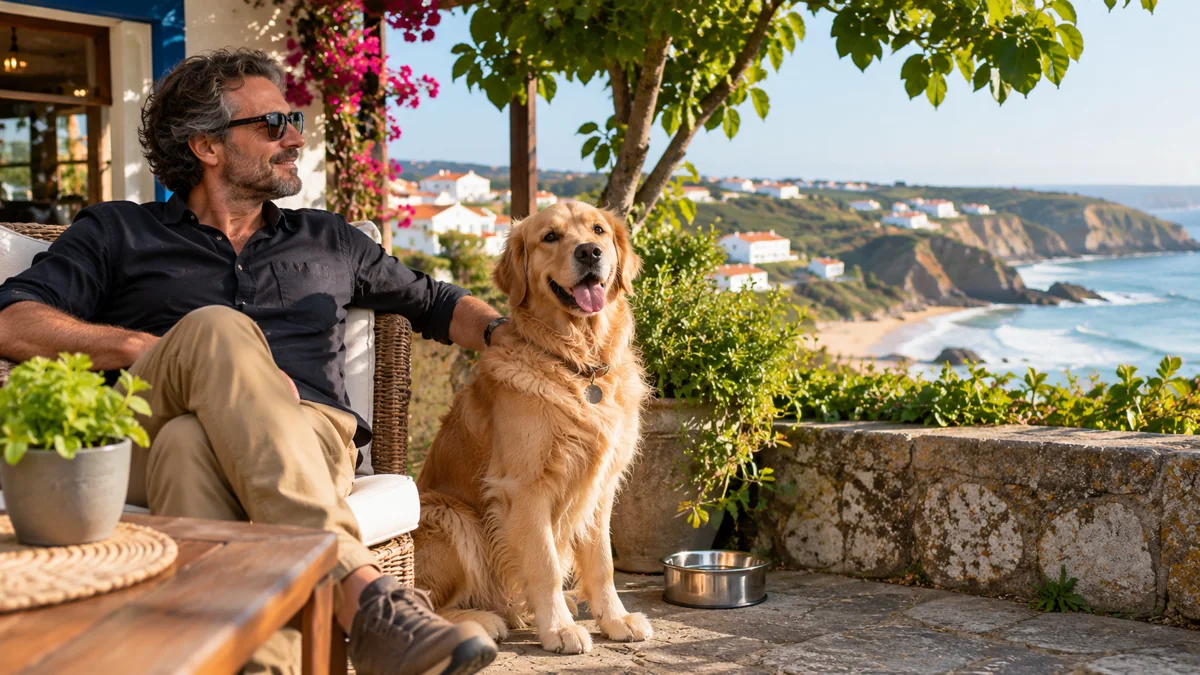
A practical guide to safe transport, travel documents, dog-friendly accommodation and beaches in Portugal.
Plan around your dog, not only the destination
Travelling with dogs in Portugal is easier when the itinerary matches the animal’s health, temperament and routine. Check journey length, expected temperatures, shade, walking areas and access to veterinary care before booking. Start with a short overnight stay if your dog has never travelled before. Bring familiar bedding, keep feeding times consistent where possible and allow extra time for rest. A scenic coastal location may still be unsuitable during very hot weather or when access with animals is restricted.
Documents for travel within Portugal
For journeys within Portugal, the Portuguese veterinary authority DGAV states that the person accompanying a companion animal should carry its Companion Animal Identification Document (DIAC) or Pet Passport. Make sure microchip registration and contact details are current. Ask your veterinarian whether your dog needs additional preventive care for the destination. Domestic requirements should not be confused with those for border crossings.
Car safety and restraint
Portuguese road-safety rules require safe transport and avoidance of interference with driving, but they do not prescribe one universal crate or harness model for every dog. Choose a properly secured travel crate or compatible restraint that prevents distraction and unnecessary movement. Never allow a dog to roam freely in the front passenger area or travel on someone’s lap. Introduce the restraint through short positive experiences before a long drive. Follow equipment manufacturer instructions; attaching a restraint to a neck collar is not a safe substitute for an appropriate system.
Breaks, water and heat
Allow regular stops tailored to the dog’s age, health and comfort. Carry drinking water and bowls, and avoid abrupt changes in diet. Never leave a dog alone inside a parked vehicle: temperatures can rise dangerously even when the weather feels mild. Excessive panting, weakness or confusion can be warning signs of heat-related illness. Seek urgent veterinary advice if heatstroke is suspected, and follow professional cooling guidance while arranging treatment.
Booking dog-friendly accommodation
Pet-friendly does not mean that every hotel has the same policy. Before paying, ask for written confirmation that dogs are permitted on your dates. Check size and number restrictions, fees, deposits, breed limitations, rules for leaving dogs alone in rooms and access to breakfast spaces, restaurants, gardens and pools. Confirm any accessibility needs. A photo of a dog in an accommodation listing is not a substitute for the current booking terms. Rates and availability vary; verify them directly with the property.
Beaches, parks and walking routes
Access rules differ across beaches and protected areas, and may change during the bathing season. Check signs, municipal rules and local notices rather than assuming dogs are allowed everywhere. Keep the dog under control, collect waste and respect wildlife and other visitors. On walking trails, plan water breaks and avoid hot pavement. Early morning or evening walks may be more suitable in summer.
Trains, buses and flights
Transport operators set their own pet policies, including carrier sizes, leash or muzzle requirements, fees and limits on animal size. Check the current conditions of the rail operator, bus company or airline before purchasing tickets. Some journeys require a dedicated reservation for the dog. If your dog has severe travel anxiety, breathing problems or complex medical needs, discuss the journey with a veterinarian. Do not sedate an animal without veterinary guidance.
Travelling into the European Union
For non-commercial travel between European countries, DGAV lists microchip identification, a Pet Passport and valid rabies vaccination among the general requirements, with exceptions and destination-specific rules. EU animal-movement rules were updated in 2026, so check the current DGAV guidance and the destination country’s official instructions before departure. Some countries have additional parasite-treatment requirements. Puppies and animals returning from outside the EU may face different conditions.
What to pack and how to settle in
Pack identification documents, a leash and harness, enough regular food, water, bowls, prescribed medication, waste bags, familiar bedding, a towel and a suitable toy. Save details of a nearby veterinary practice. At check-in, let your dog investigate calmly and check balconies, windows and cleaning products for hazards. If your dog struggles when left alone, arrange activities that allow the dog to accompany you rather than leaving it distressed in the room.
Illness, emergencies and a final checklist
Before leaving, identify a local emergency veterinary service. Seek prompt assistance for persistent vomiting, breathing difficulty, weakness, seizures, suspected poisoning or heatstroke. Never induce vomiting after a suspected poisoning unless a veterinarian instructs you to do so. Before departure, confirm identification, accommodation approval, safe transport, food and water, medication, veterinary contacts, legal access to walks and a weather contingency plan. A good trip prioritises the dog’s welfare over the number of attractions visited.
Official sources and further reading
DGAV — Movimentação de animal de companhia · DGAV — Na Europa · Código da Estrada — artigo 56.º · União Europeia — Viagens com animais ·
Information reviewed in November 2026. Verify local and carrier rules before booking; guidance does not replace veterinary or legal advice.