
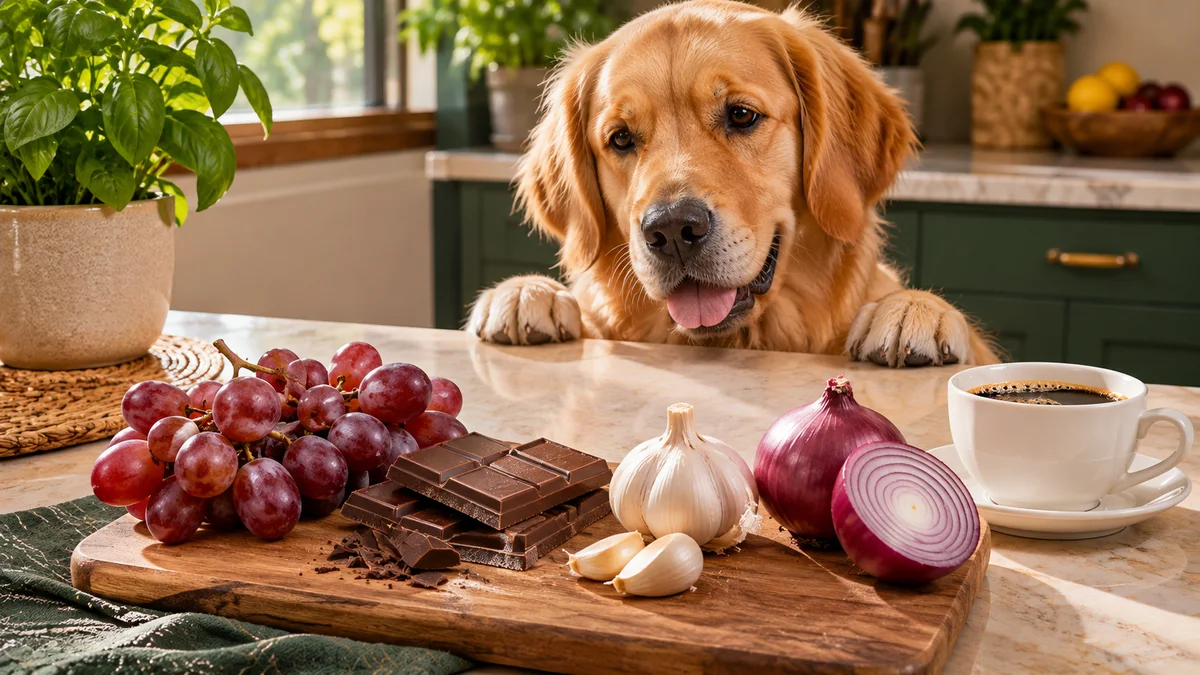
Grapes, chocolate, onions and sugar-free products may be ordinary kitchen items, yet can pose very different risks to dogs. Learn which foods to keep out of reach, how to spot a suspected poisoning and when to call a vet.
Why not all unsafe foods carry the same risk
The phrase foods toxic to dogs covers very different hazards. Some foods can cause serious organ damage, such as grapes and raisins, while excessive salt is mainly dangerous when a substantial amount is eaten. The product, concentration, amount, dog’s weight and existing health conditions all matter.
These ten examples are based on veterinary toxicology guidance, but they are not exhaustive. Do not assume a food is safe because a dog ate it before without obvious illness. Early signs may be absent even when injury is developing.
The safest strategy is prevention, safe storage and prompt veterinary advice after a suspected ingestion.
1. Chocolate: cocoa concentration changes the danger
Chocolate contains the methylxanthines theobromine and caffeine. Dogs break them down more slowly than humans. Dark chocolate, baking chocolate and cocoa powder usually pose greater risk per gram than milk chocolate.
Signs can include vomiting, agitation, a rapid heartbeat, panting, tremors and seizures. White chocolate has much less theobromine, but its sugar and fat make it an unsuitable treat.
Keep the wrapper and call your vet promptly with the type, approximate amount and time consumed, together with your dog’s weight.
2. Grapes and raisins: risk cannot be predicted from a dose
Grapes, raisins, sultanas and foods made with them may cause acute kidney injury. Sensitivity differs between dogs and there is no reliable universally safe amount. Tartaric acid and its salts are thought to contribute, although research is ongoing.
Hidden sources include cakes, breakfast cereals, dried-fruit mixes and baked goods. Vomiting or lethargy may appear after several hours, while kidney injury may develop later.
Any known or suspected ingestion warrants an immediate call to a vet. Never wait for symptoms.
3. Onions: raw, cooked or powdered
Onions are members of the Allium family and can damage red blood cells, leading to anaemia. Cooking does not reliably remove the hazard. Onion powder in sauces, soups and prepared meals is also relevant.
Symptoms may include vomiting, weakness, pale gums, rapid breathing and dark urine. Signs of anaemia may be delayed.
Do not share food seasoned with onions. Tell a vet about suspected large or repeated exposure.
4. Garlic: natural does not automatically mean safe
Garlic is another Allium vegetable and can damage red blood cells. The dose and concentration matter: fresh cloves, dried garlic, powders and supplements are different exposures.
Do not use garlic as a homemade parasite treatment. Small regulated quantities in certain formulated products should not be confused with giving cloves or concentrated supplements.
Seek professional advice after suspected significant ingestion and keep the packaging.
5. Xylitol: an urgent risk in some sugar-free products
Xylitol, sometimes labelled birch sugar, is found in certain chewing gums, sweets, baked products, oral-care items and supplements. In dogs it can trigger a rapid insulin response and severe hypoglycaemia; liver injury is also possible.
Vomiting, weakness, incoordination, collapse and seizures can develop quickly. Not every sugar-free product contains xylitol: examine the ingredient list.
Call a vet immediately after known or suspected ingestion, even if your dog seems well.
6. Coffee, tea and concentrated caffeine
Caffeine from coffee grounds, coffee beans, energy drinks, tea and supplements can overstimulate a dog’s nervous and cardiovascular systems.
Possible signs include restlessness, panting, vomiting, a fast heartbeat, tremors and seizures. A diluted drink and a concentrated supplement are not equivalent exposures.
Keep coffee pods, grounds and caffeine products locked away, and report the product and estimated amount to your vet.
7. Alcohol: drinks and alcohol-containing foods
Alcohol can cause vomiting, incoordination, profound drowsiness, low body temperature, breathing difficulties and coma. Desserts, drinks and fermented foods may contain it.
Never give alcohol as a calming or home treatment. The severity depends on the amount, concentration and size of the dog.
Seek urgent veterinary assessment if alcohol was swallowed or your dog shows altered consciousness.
8. Macadamia nuts: weakness and tremors
Macadamia nuts can cause weakness, vomiting, tremors, reduced coordination and increased body temperature in dogs. Their precise toxic mechanism is not fully understood.
Cookies and nut mixes containing macadamias may also include chocolate or xylitol, creating additional hazards.
Do not offer macadamia nuts. Check every ingredient and call your vet after ingestion.
9. Raw yeast dough: expansion and alcohol production
Unbaked dough containing active yeast can expand inside the stomach and produce alcohol as it ferments. This creates a mechanical bloating hazard as well as a risk of alcohol toxicity.
Warning signs include a swollen abdomen, unproductive retching, weakness, staggering or breathing difficulty. This is not the same as a small piece of fully baked, plain bread.
Do not induce vomiting or attempt home treatment. Seek immediate veterinary care.
10. Too much salt: the amount is crucial
Large quantities of salt, salty snacks or concentrated stock products can cause sodium poisoning. Signs may include intense thirst, vomiting, diarrhoea, tremors, poor coordination and seizures.
A tiny crumb of salty food does not necessarily cause toxicity. The correct message is that excess sodium can be dangerous, especially to small dogs or those with health conditions.
Never use salt to make a dog vomit: that itself may cause serious harm.
What to do if your dog eats something dangerous
1. Prevent further access and keep the packaging or ingredient label. Note the suspected amount and time.
2. Call your veterinarian or an emergency veterinary hospital immediately. Give your dog’s weight, the product and any symptoms. For grapes, raisins and xylitol, do not wait for symptoms.
3. Do not induce vomiting or give salt, milk, activated charcoal or medication unless instructed by a vet. Do not force food or water.
4. Follow professional instructions and take the packaging to the hospital if a visit is advised.
Five common myths
“A tiny amount is always harmless.” False. Grape sensitivity is unpredictable, and concentration matters for many other substances.
“Wait for vomiting before calling.” False. Serious signs may be delayed and early treatment can matter.
“Garlic is a safe natural wormer.” False. It is not a substitute for veterinary parasite prevention and can be toxic.
“White chocolate is as toxic as dark chocolate.” False. The methylxanthine content differs, although neither should be fed as a treat.
“Sugar-free means dog-safe.” False. Some sugar-free products contain xylitol.
How to make your kitchen safer
Keep grapes, chocolates, sweets and nuts in closed cupboards; clean up food scraps promptly and secure bins. Store coffee grounds and uncooked dough out of reach.
Tell visitors and children not to offer food without permission. Have suitable dog treats available and use a safe area during busy meal preparation.
Keep your vet’s emergency contact details handy. Reading ingredient labels and following a safe storage routine can prevent many incidents.
Frequently asked questions
Can a single grape be dangerous? Yes. Individual sensitivity cannot be reliably predicted; contact a vet after any ingestion.
My dog ate chocolate. What now? Keep the wrapper and call a vet with the product type, amount and your dog’s weight.
Is bread safe? Plain baked bread is different from raw active-yeast dough. It should not replace balanced nutrition and ingredients still matter.
Does cooking make onions and garlic safe? Not necessarily. They can still cause harm after cooking or drying.
What counts as an emergency? Suspected exposure to toxic foods deserves prompt veterinary advice; seizures, collapse, breathing difficulties or a swollen abdomen require emergency care.
Continue reading our veterinary warning-sign guide and canine first-aid article. You can also download the printable checklist.
Printable kitchen safety checklist
A compact reference for the kitchen, including the ten food risks and emergency action steps.
Download PDF checklistVeterinary references
- FDA — Potentially Dangerous Items for Your Pet
- ASPCA — People Foods to Avoid Feeding Your Pets
- Cornell University — Grape and Raisin Toxicity
- Pet Poison Helpline — Raw Bread Dough
- FDA — Holiday Food and Xylitol Hazards
Educational information. Always seek individual veterinary guidance after a suspected poisoning. Sources reviewed November 2026.