
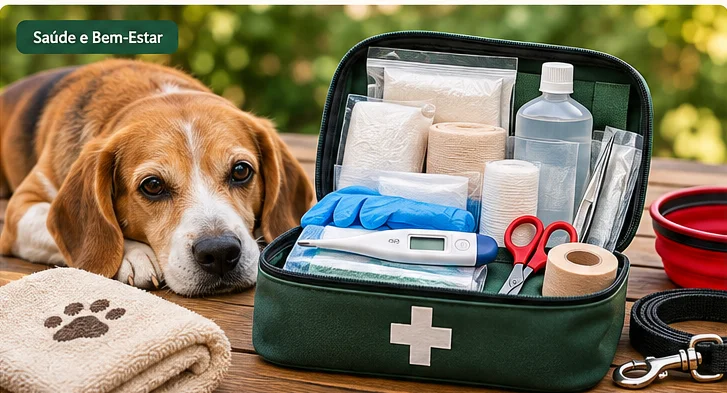
A well-prepared kit does not replace a vet, but it helps you protect your dog during an emergency.
Preventive information and initial first aid only. This guide does not replace veterinary diagnosis or treatment. In an emergency, contact a veterinarian immediately.
First aid does not replace veterinary care
A canine first aid kit helps you respond during the first minutes of an unexpected incident: a minor wound, external bleeding, a paw injury or transport to a clinic. It cannot diagnose or treat serious illness.
Protect yourself first: even a gentle dog may bite when frightened or in pain. Breathing difficulty, collapse, serious bleeding or suspected poisoning requires immediate veterinary assistance.
What to put in your dog first aid kit
Sterile gauze and non-stick dressings. For covering minor wounds or applying direct pressure to bleeding.
Roller bandages and medical tape. For temporary covering only; bandages that are too tight can restrict circulation.
Sterile saline. Useful for gentle flushing when advised by a vet; it is not a treatment for eye injuries.
Disposable gloves. Keep several pairs to reduce contact with blood or secretions.
Blunt-ended scissors and tweezers. For cutting dressings or removing only tiny, loose superficial debris. Never pull out an embedded object.
Clean towel or blanket. For protection and safer transport where appropriate.
Digital thermometer. Only if you know how to use it safely and your dog tolerates the procedure.
Lead, harness and appropriate basket muzzle. Use a muzzle only if the dog is breathing normally, is conscious and is not vomiting.
Emergency contacts and records. Your vet, the nearest emergency clinic, microchip details, current medication, allergies and vaccination information.
What not to keep for unsupervised treatment
Do not administer human painkillers or leftover antibiotics. Substances such as ibuprofen and paracetamol may cause serious toxicity depending on circumstances and dose.
Avoid harsh disinfectants, alcohol on wounds, old prescription creams, medicines to induce vomiting and home antidotes. Follow written veterinary instructions for any medicine prescribed specifically for your dog.
Helping with a minor wound
Move the dog away from danger. If bleeding, apply firm, continuous pressure using clean gauze and seek urgent help if bleeding is heavy or does not stop promptly.
For a minor injury, gentle rinsing with sterile saline and a temporary non-stick dressing may help while you obtain advice. Deep wounds, bites, burns, embedded objects and injuries near the eyes need veterinary examination. Never attempt to stitch a wound at home.
Suspected poisoning: contact a professional
Prevent further exposure and note the product name, strength, likely amount and time. Take the packaging to the clinic if safe. Call a vet or emergency service immediately.
Never induce vomiting or give milk, salt, activated charcoal, medicines or other home remedies unless a veterinarian explicitly tells you to do so. Certain substances become more harmful when vomited.
Heatstroke, breathing difficulty and collapse
A dog that becomes severely distressed, disorientated or weak in a hot environment may have heatstroke. Move to a cooler place, begin cooling with cool rather than icy water, and arrange urgent veterinary care while continuing safe cooling as directed.
For laboured breathing, minimise handling and stress. If the animal is unconscious, follow emergency staff instructions. Hands-on resuscitation skills should be learned from qualified professionals, not improvised from a written article.
Keeping the kit ready
Choose a sturdy, labelled bag that opens quickly. Keep it away from pets and children but accessible to adults. Store clean materials separately and carry emergency phone numbers on the outside.
Check the kit every three months for expired sterile products, damaged packaging and working equipment. Replace used supplies promptly. For holidays and day trips, carry a portable version and identify an emergency clinic at your destination.
Checklist to save
☐ Sterile gauze and non-stick dressings; ☐ roller bandages and tape; ☐ sterile saline; ☐ disposable gloves; ☐ scissors and tweezers; ☐ towel or blanket; ☐ thermometer if appropriate; ☐ lead and safe handling equipment; ☐ emergency contacts and clinical details.
Preparation matters more than the size of the kit. Read our companion guide on seven warning signs that your dog needs a vet.
Frequently asked questions
Do I need a specially branded canine first aid kit? Not necessarily. A sturdy bag with suitable materials and current emergency contacts can work well.
Can I bandage a paw? Temporary protection may help, but poorly fitted bandages can cause harm. Ask a vet for instructions.
Should I take a kit when travelling? Yes. Include your dog’s details and emergency contacts for the destination.