
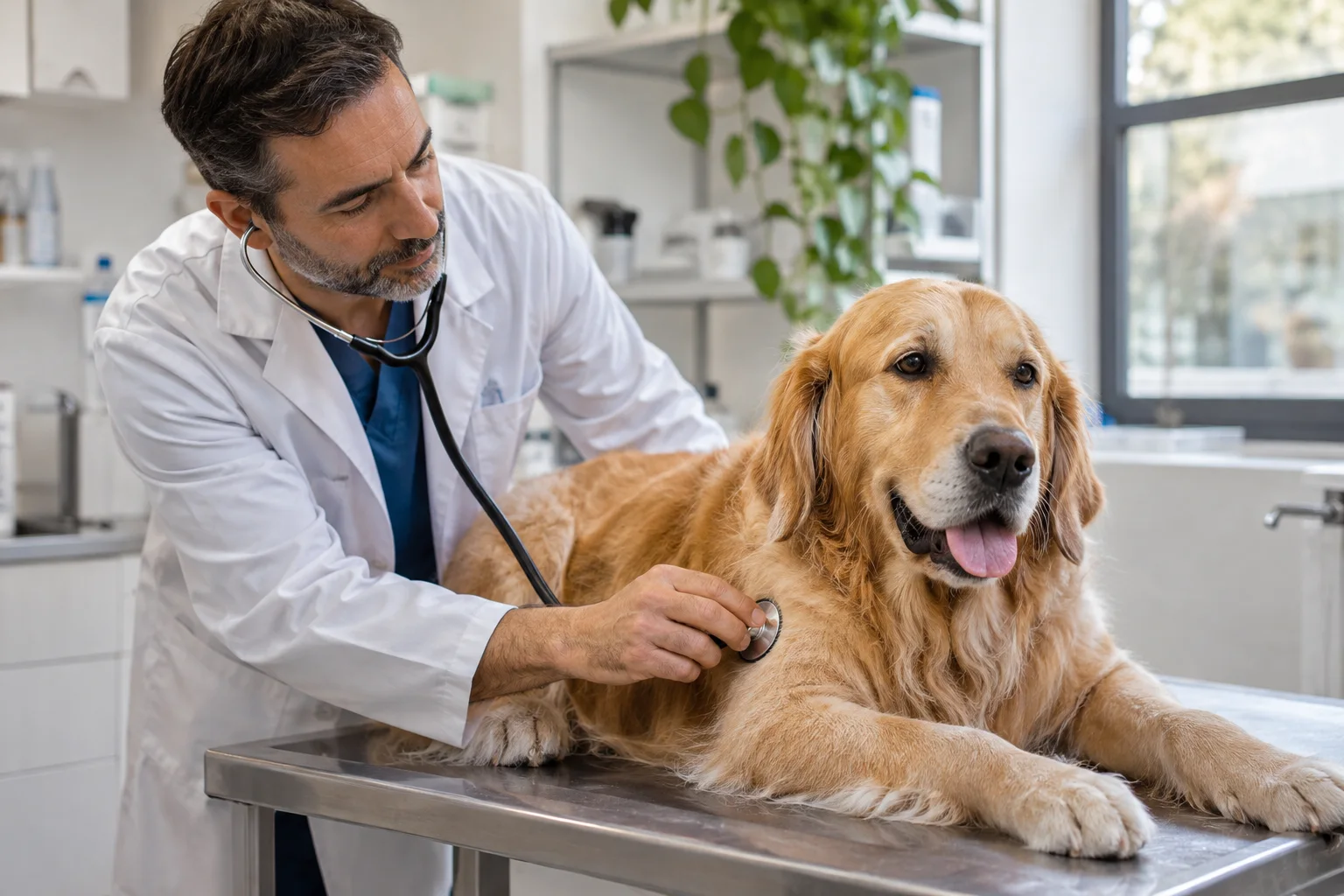
Recognising changes in your dog’s health and behaviour can help you seek care promptly.
Preventive information and initial first aid only. This guide does not replace veterinary diagnosis or treatment. In an emergency, contact a veterinarian immediately.
Why noticing changes matters
Knowing your dog’s normal appetite, thirst, energy, breathing, movement and behaviour helps you spot a potential problem early. These signs do not let you diagnose a disease at home; they help you decide when to seek veterinary care.
Puppies, older dogs and animals with existing conditions can become unwell more quickly. If you are unsure how serious a symptom is, call your vet and describe the change.
1. Loss of appetite or unusual thirst
Skipping one meal does not always mean serious illness, but persistent loss of appetite can accompany pain, nausea, dental disease or other problems. Check whether your dog drinks, remains alert, or has vomiting or diarrhoea.
Refusing water, being unable to keep it down, or appearing weak requires prompt veterinary advice. Drinking and urinating much more than usual also warrant assessment. Never force food or drink into a weak animal.
2. Vomiting or diarrhoea
A single episode can have several explanations. Frequency, duration, age and other symptoms are crucial. Note possible exposure to rubbish, human medication, discarded food or swallowed objects.
Repeated vomiting, blood, marked weakness, severe diarrhoea, abdominal pain or inability to drink require urgent advice. Puppies are especially vulnerable to fluid loss. Do not give human medicines without veterinary direction.
3. Lethargy, weakness or behaviour changes
A dog that hides, stops playing or avoids contact may be in pain or unwell. Compare the change with their usual behaviour and consider recent activity and heat.
Sudden collapse, severe weakness, disorientation or inability to stand calls for emergency attention. Less dramatic but persistent changes should still be assessed; do not dismiss them as ageing.
4. Difficulty breathing or persistent coughing
Normal resting breathing should look comfortable. Laboured breathing, blue or grey gums, a stretched neck, collapse or obvious respiratory effort are emergencies.
A persistent cough also deserves assessment, especially in an older dog or one with existing heart or lung disease. Keep a breathless dog quiet and do not use a muzzle that could restrict breathing.
5. Changes in urination or stools
Straining, blood, pain, unusual frequency or sudden accidents indoors can signal a problem. Note when the dog last passed urine and whether stools have changed.
Repeated attempts to urinate without producing urine are an emergency. Significant bleeding or black, tar-like stools also warrant urgent help. A photo or sample may be useful if your vet requests it.
6. Pain, limping or mobility problems
Limping, reluctance to climb stairs or difficulty rising can indicate pain. Dogs do not always cry out; some simply become quieter or less active.
After trauma, or if there is severe pain, paralysis or an inability to bear weight, seek urgent care. Do not force the dog to walk or administer human painkillers.
7. Changes affecting the eyes, ears or skin
A painful or closed eye, discharge, head shaking, intense scratching or slow-healing wounds warrant veterinary assessment. Many conditions look similar but require different treatment.
Sudden vision changes or a very painful eye need same-day attention. Facial swelling with difficulty breathing can indicate a life-threatening reaction. Avoid using old eye drops or creams without advice.
Veterinary emergencies: act immediately
Emergency signs include difficulty breathing, collapse, repeated or prolonged seizures, serious bleeding, inability to pass urine, suspected poisoning, severe pain, sudden paralysis, or a swollen abdomen with unproductive retching. The latter can indicate gastric dilatation-volvulus.
Call ahead when feasible without delaying travel. Keep the dog safe and calm, avoid medication and minimise handling during transport. Do not give food or water to an unconscious or breathless animal.
What to tell your vet
Record when signs started, how they changed, current medication, existing conditions and possible exposure to toxins. A brief video may help if recording it does not delay treatment.
Save your regular vet’s and an emergency clinic’s phone numbers. Our dog first aid kit guide explains how to prepare for emergencies.
Frequently asked questions
Should I call if my dog has not eaten for a day? Age, medical history and other symptoms matter. Contact a vet earlier for puppies or vulnerable dogs and immediately if other warning signs appear.
May I give medicine kept at home? No. Human medications and outdated prescriptions can be dangerous.
Can a behaviour change alone justify a consultation? Yes, especially when sudden or persistent. Your knowledge of your dog’s normal behaviour is valuable.