
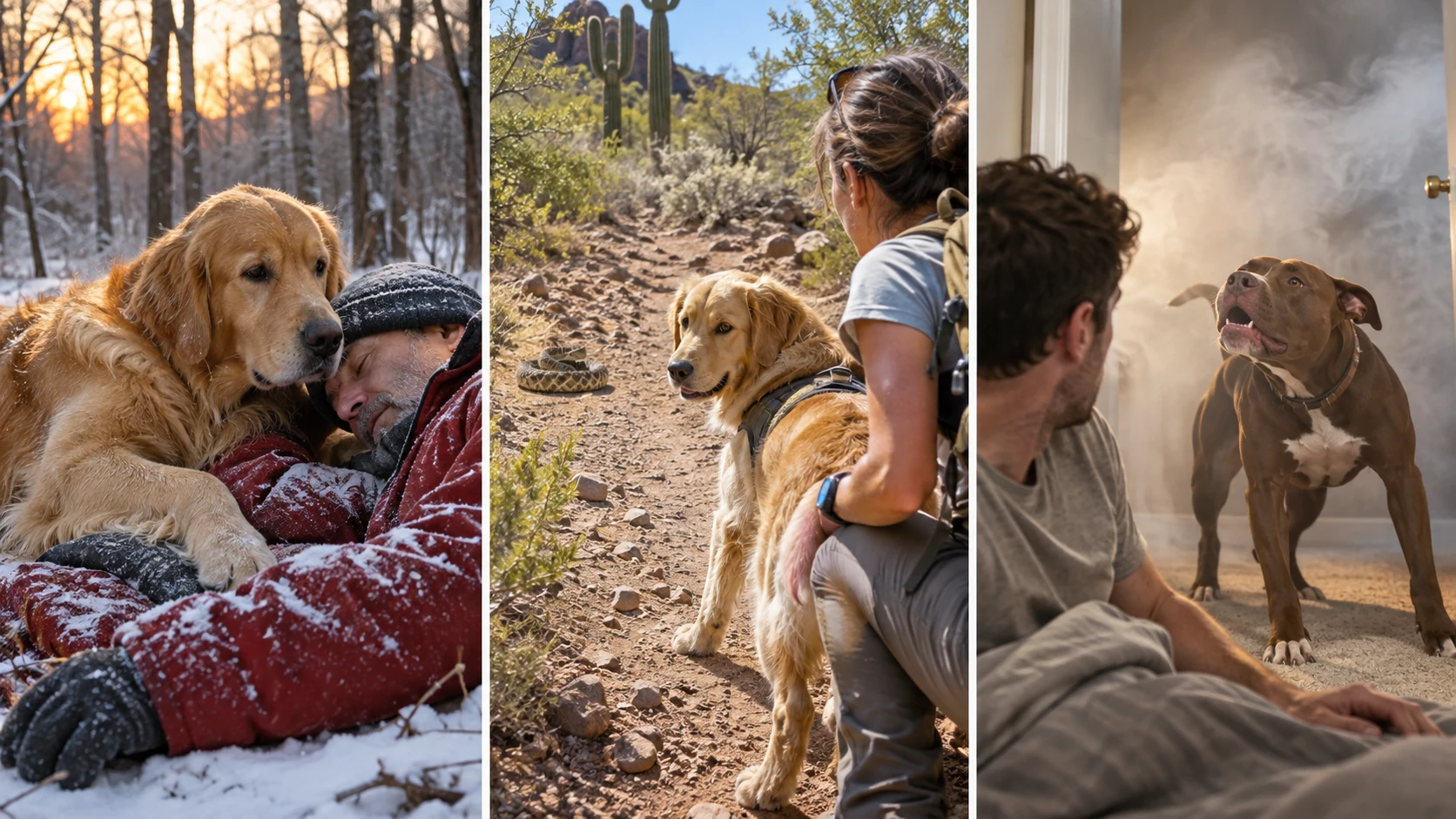
Some events show how important the bond between dogs and people can be. Not because all dogs can predict disasters, but because a particular behaviour — staying close, moving into danger or waking someone up — may change how an emergency unfolds.
The following three cases took place in the United States. They were covered by news organisations that identified the owners and described the circumstances. In some cases, medical professionals also commented. This account distinguishes documented events, personal testimony and interpretation. The pictures are AI-generated illustrative reconstructions, not photographs of the actual dogs.
1. Kelsey: twenty hours beside her owner in the snow
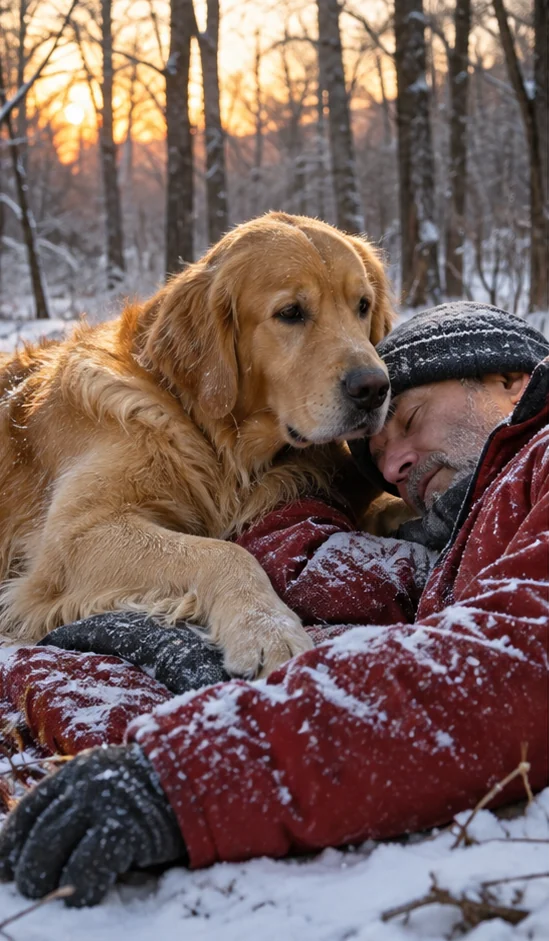
On the night of December 31, 2016, Bob went outside near Petoskey, Michigan, to collect firewood. He slipped and fell, suffering a serious neck injury that left him unable to stand. He was only a short distance from his home, but could not get back inside. His neighbours lived too far away to hear his initial calls for help.
Kelsey, his Golden Retriever, heard him and stayed close. According to news reports published in January 2017, she licked his face and hands, lay across parts of his body and repeatedly barked. Temperatures fell to around 24°F (about -4°C), while Bob remained outside for roughly twenty hours.
A neighbour eventually found Bob the following day. He needed urgent medical care and was taken to McLaren Northern Michigan, where he underwent neurosurgery. Doctors credited Kelsey with helping him survive the cold during the long wait, while hospital treatment was also essential to his recovery.
The extraordinary part of this account is not a supernatural ability but persistence. Kelsey could not call an ambulance or repair the injury. She stayed close, provided contact and kept trying to draw attention. During prolonged exposure to freezing temperatures, those actions mattered.
CBS News and the American Kennel Club covered the event, citing the owner and medical professionals. Calling Kelsey a “hero” is a public expression of gratitude; the reported facts are compelling even without embellishment.
2. Todd: the puppy that stepped between his owner and a rattlesnake
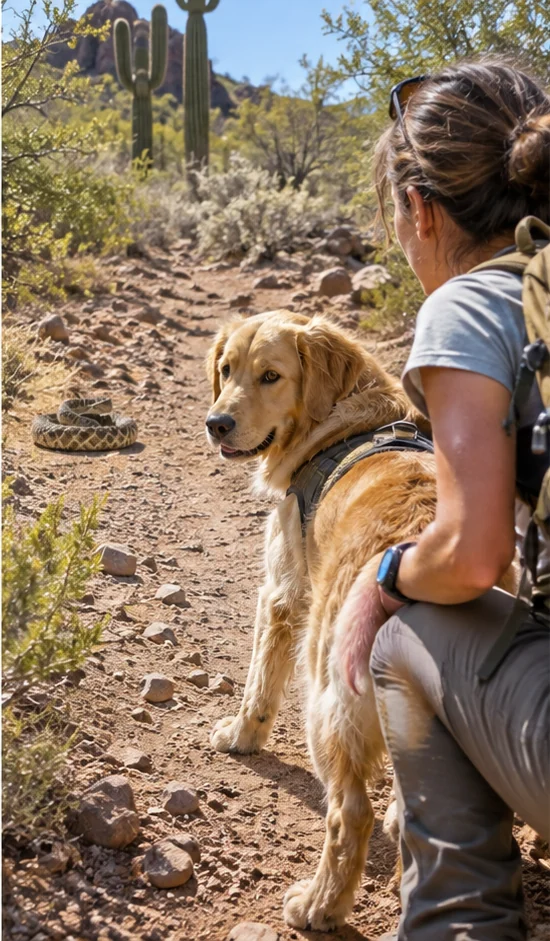
On June 29, 2018, Paula Godwin was walking her dogs near Anthem, Arizona. A rattlesnake was camouflaged on the trail. Paula later told ABC News that she had not noticed it and was very close to stepping towards it.
Todd, a six-month-old Golden Retriever, moved in front of Paula. The snake bit him on the muzzle. Todd received veterinary care, including antivenom treatment, and was monitored. Reports at the time said that his recovery was going well.
Paula described Todd as her hero and believed that he had prevented her from being bitten. That distinction matters: it is documented that Todd was bitten after moving between her and the snake. The reports cannot establish with certainty whether Paula would otherwise have been bitten or whether the outcome would have been life-threatening.
The story attracted widespread attention. Todd was even recognised by the Arizona Diamondbacks during an event celebrating heroes. The celebration helped make his story famous, but it should not obscure the practical lesson: walking where venomous reptiles may be present requires careful observation, distance and appropriate control of the dog.
A dog bitten by a snake needs prompt veterinary treatment. Attempts to suck out venom, cut the wound or use improvised home remedies may cause harm. Appropriate treatment depends on the species, symptoms and veterinary assessment.
3. Duke: the alert that helped his owner escape a house fire
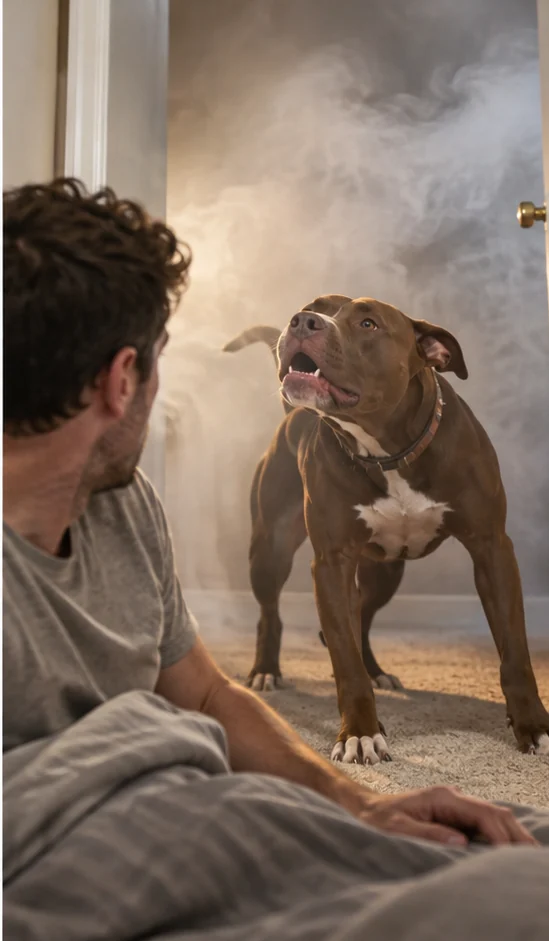
In October 2024, in Chesapeake, Ohio, Shannon Boggs was asleep when a fire began spreading through his home. According to an interview published by local television station WSAZ, his Pit Bull, Duke, climbed onto him and barked persistently until he woke up.
Shannon said that he was initially confused as he became aware of an emergency. Smoke alarms were sounding and the fire was spreading. He managed to get out of the house with Duke. Both survived, but their home was destroyed and they faced the consequences of losing their belongings.
Shannon, a former firefighter, said that he believed a delay of only a few minutes might have prevented their escape. That is his personal assessment, reported by the local news station, rather than an independent technical determination of the precise time escape would have become impossible.
Duke provided an immediate and effective warning. He did not replace smoke alarms, electrical safety precautions or an escape route. His persistence nevertheless helped wake his owner in time to respond.
WSAZ reported the story on October 7, 2024, quoting Shannon directly. An identified witness and a dated local report make this a useful example of how to verify a story before repeating it online.
4. What these stories show — and what they cannot prove
Kelsey stayed with an immobilised person, Todd moved towards a snake and Duke woke a person during a fire. These were three different behavioural responses. They do not prove that all dogs can anticipate danger or that dogs possess a universal rescue instinct.
Neither do the reports establish a human-like conscious intention. Dogs respond according to learning, attachment, their sensitivity to environmental cues and the circumstances. We can recognise meaningful closeness without claiming to know exactly what an animal was thinking.
There is also a distinction between helping to save a life and preventing a possible injury. Todd deserves recognition, but precise language matters: his actions protected Paula in a potentially dangerous encounter, while the severity of a bite that never happened cannot be measured.
5. Practical lessons for dog owners
These stories offer an opportunity to strengthen safety habits: keep identification details up to date, practise recall in controlled areas, supervise outdoor activities and pay attention to weather conditions. Where snakes may be present, keep a safe distance from wildlife and maintain appropriate control of your dog.
At home, functioning smoke detectors, a fire escape plan and clear exit routes are essential. Serious injury or prolonged exposure to cold calls for emergency services as quickly as possible. Having an attentive dog is valuable; treating that animal as an emergency system is not a substitute for preparation.
The human–dog bond is also built through ordinary routines: suitable nutrition, rest, walks, responding to signs of discomfort and reward-based training. Those daily responsibilities matter even when nothing extraordinary ever happens.
Three stories, one shared responsibility
These are different accounts with a common thread: a dog’s presence may play a decisive role during a dangerous situation. Remembering them does not require exaggerating events or treating dogs as infallible heroes. It means describing what happened while acknowledging what remains uncertain.
At ALÉM DA TRELA, stories like these belong to a broader approach to the relationship between people and dogs: empathy, verifiable information and responsible care.
News sources reviewed
The sources below document the cases. Images on this blog are reconstructions, not reproductions of news photographs.
Editorial note and transparency
The images on this page are AI-generated illustrative reconstructions. They do not depict Kelsey, Todd, Duke or their actual owners.
This article is for general information. In an emergency, contact the appropriate emergency or veterinary services.