
- Origin
- Germany
- Size
- Small
- Daily needs
- Scent walks and back care
- Coat
- Smooth, long or wire-haired
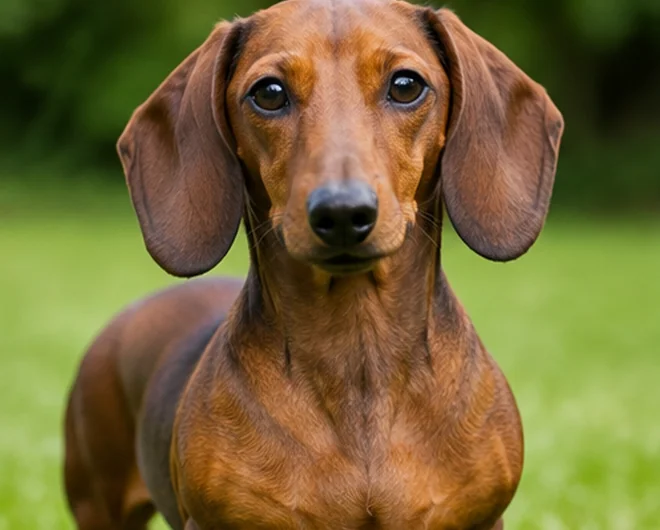
Small, long-bodied scent hound, bold and curious.
Temperament and family life
Dachshunds were developed for underground work and retain persistence, initiative and strong scenting instincts. They may bark at unfamiliar things; gradual exposure helps build confidence.
Individual variation matters. Observe the dog in a calm setting, ask about its history and avoid assuming every individual has exactly the same character. Early positive experiences, predictable rules and proper rest help build trust.
Exercise and training
Walks should allow safe sniffing and exploration. Recall, waiting and relaxed lead walking are just as valuable as play.
Plan exercise according to age, health and fitness rather than fixed daily quotas. Reward the behaviours you want to see and include safe sniffing, rest and gradual exposure to new environments.
Health and grooming
Their long backs make weight control and veterinary discussions about spinal health particularly important. Avoid encouraging repeated jumps from high furniture.
Routine veterinary examinations, appropriate nutrition, parasite prevention and body-condition monitoring are essential. Ask for health screening where relevant to the breed; no pedigree replaces individual clinical assessment.
Lifestyle fit
Apartment living can work with companionship and enrichment. Small size does not mean low needs: this is often a determined, vocal dog.
Before deciding, calculate food, insurance or veterinary reserves, time at home, holiday cover and the availability of safe places to exercise. Meeting a particular dog is more useful than selecting only from a breed description.
Before making a decision
Breed profiles describe general tendencies, not guarantees. Individual temperament, health history and routine should guide responsible adoption or purchase. This article is informative and does not replace veterinary advice.
Sources and further reading
Images are AI-generated illustrations; the content summarises general breed tendencies and does not replace veterinary advice.